


At the beginning of the year, I had an email from Brad Kelley, a 35-year-old dad of two, who shared his struggle during the early years of fatherhood—unable to understand why he was finding things so hard when other dads found them so easy: “My tolerance of stressful situations seemed so much lower, and I noticed myself losing my temper and shutting down from my family.”
He went digging for answers, and what he found completely changed his perspective on parenting, allowing him to unlock new empathy and show up for his kids in wonderful ways. Thanks for this essay, Brad. If you like this, you can read more of his writing at Life on Hard Mode.
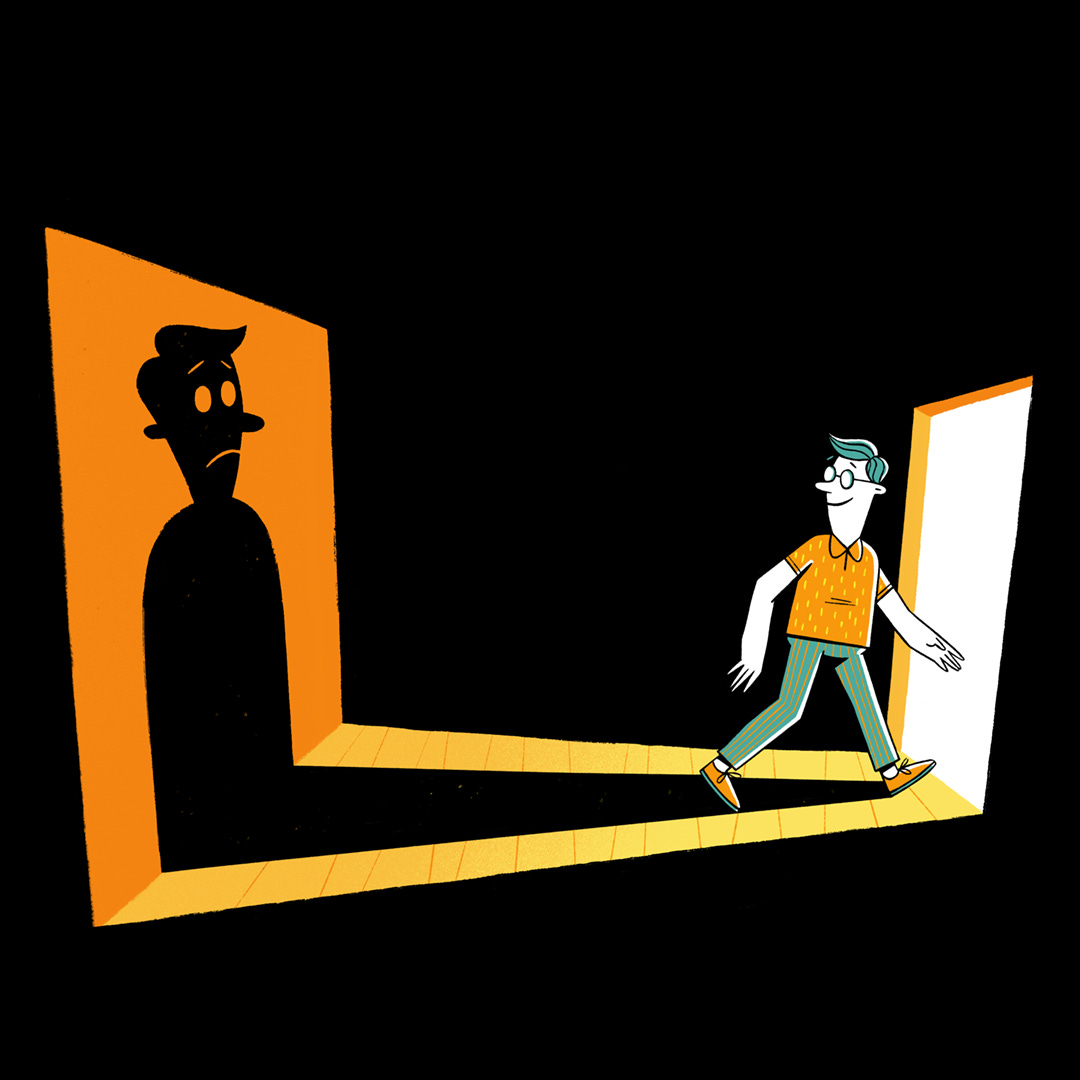
I hear the car pulling into the driveway. It’s the unmistakable, ethereal hum of our electric car—a chorus of angels signalling the rapture. But it’s worse than that. The kids are home, and I haven’t started dinner. Again.
I pound down the stairs, switching on the oven and boiling the kettle, wondering where the time went. I swear it was 2:30 ten minutes ago. I check my watch; it’s past 4 pm. The kids pile in, already at each other’s throats. Their screams puncture the silence. My sanctuary is once again prowled by my unpredictably loud offspring. I wince with every shriek.
I scramble to clean a pan I thought I’d washed earlier. I hadn’t. I’d seen a bird I didn’t recognise through the kitchen window and fell down an ornithological rabbit hole. Yes, I now know the migratory patterns of the Hawfinch, but dinner is no closer to being cooked. I cut. I peel. I slice my finger moving faster than my brain can manage. One kid wants a drink; the other wants TV. I pull myself apart to satisfy the needs. This shouldn’t feel so strenuous, yet here I am.
Food burns in an unattended pan. A fire alarm drills a hole in my skull. My brain glitches over and over. One child pulls at my leg, protesting that they’ve been hit. Counter-accusations fly. Decibels soar. The pressure floods my body. My chest tightens like a vice. I flit between half-finished tasks, achieving less each time. The train is derailing. I can see it happening, yet I cannot stop it.
One more scream slaps me on the back of the head like a cricket bat. Every muscle tenses, and the pressure releases. I shout. I can’t remember the words, but they’re not kind. They are words I swore I wouldn’t use. Not with my kids. It was meant to be different. I was meant to be different.
My wife catches me, once again. She invites me to take five in another room. I retreat. Silence slowly returns, accompanied by the familiar guilt and the ever-present shame.
Growing up, my dad worked a lot. He did his best, but I wanted to be different. I never wanted anything to get in the way of being a present, involved father. I didn’t realise that pursuit, while noble, would drain me far faster than I could imagine. We all know the moment you become a father, the concept of time changes. The ring-fence around your eight hours of sleep comes crashing down. For me, the adjustment felt debilitating.
Our first wasn’t a great sleeper. At any moment, she could burst into an earth-trembling frenzy; usually in the depths of night. Even the smallest noise or movement at night would send me into a panic. My wife made me sleep with noise-cancelling headphones and blaring white noise, just so I’d get at least a couple of hours.
Not knowing what awaited me hour by hour hastened my heartbeat regularly. I walked a tightrope through those first months. Ceaseless dysregulation made me snappy and quick to anger. Getting pee or poo on my skin wasn’t just an inconvenience; the unwanted sensory assault would ruin my day. Feeding her sludgy baby food made me retch.
As the second arrived and the first started school, things only got worse. Where it was once acceptable to stay in pyjamas with the baby, now the eldest needed the nursery run. PE was on Tuesdays, then switched to Wednesdays halfway through the year for no discernible reason. She needed specific clothes packed depending on emails from the school the night before. Keeping up with the maelstrom of child admin was proving impossible for me. On more occasions than I’d like to admit, I had to drive home from drop-off to get my daughter’s shoes. Once, I’d brought her with no shoes at all.
Maintaining a household with two young kids is a constant logistical exercise, and yet I wasn’t pulling my weight with the mental load. More of it fell to my wife, simply because I was proving to be so unreliable. I could sense the resentment building, fuelling the cycle of shame I’d been nursing long before parenthood.
These are things dads around the world contend with. So why was I struggling so badly with inconveniences that others seemed to take in their stride? I always knew I was wired differently. It was one thing for my lack of social and organisational skills to cause me to lose touch with friends, or forget to collect important medication for myself, among many other things.
But when I couldn’t advocate for my own kids because of my social skills? When I forgot their coats on a long walk—leaving them frozen to the bone—because of my own disorganisation? That was a whole other level of failure. I wanted so badly to be the involved father I didn’t have growing up—but I felt like I was failing. At times, part of me wondered if I was better off not being there at all.
I think deep down, I always knew I was autistic. My mum told me I didn’t speak until I was three. An audiologist queried autism, but a family doctor shut it down. Ever since finding out about that in my teens, I held onto the possibility like a precious jewel. Maybe—just maybe—this was why I felt so out of place.
I muddled through life, favouring the French exit from parties, staying on the periphery of social circles. Despite the struggles, I never thought much about it. I had a job, a marriage, a life I could bend to my will. I could avoid the situations that brought me anxiety. And then I had kids. Suddenly, ever-shifting routines sent my stress levels through the roof. Every sense was under attack. And yet, I still didn’t connect the dots.
Why? Because I wasn’t counting toothpicks. I wasn’t Rain Man. I was able to live independently. I was still in the mindset that everyone was “a little autistic”—but that I wasn’t autistic enough to do anything about it.
My wife was the first person to mention ADHD. She showed me accounts from other 30-somethings on social media who were realising they’d been struggling with the difficulty turned up all this time without knowing it. The traits resonated—but I couldn’t quite place myself in that box either. ADHD kids were the hyperactive ones, wrecking classrooms. I was the quiet kid, doodling in margins and staring out the window. “A capable student—if only he’d apply himself more.”
Like Cinderella’s step-sisters, the glass slipper didn’t fit quite right on either. Then one day, my wife sent me a reel featuring an acronym I’d never seen before: AuDHD. Whilst not an official diagnosis in itself, it represents the co-existence of autism and ADHD. It didn’t make sense to me—they seemed such polar opposites. And yet, 20-50% of children with ADHD meet the criteria for an autism diagnosis, and 30-80% vice versa.
Until 2013, you couldn’t be diagnosed with both; clinicians had to pick the “most severe”. But now, the commonality of co-occurrence is medically recognised. I could hardly believe that I may have just found the answer to my eternal question. Cinderella had just entered the room with the other slipper. It fit perfectly.
Every now and then, I think back to the three-year-old boy I used to be. I see so much of myself in my girls, especially my eldest. They don’t have high support needs, but neither did I. The impact of unseen neurodivergence isn’t measured in the immediacy, but in the decades of masking (curating alternative versions of yourself just to fit in) and hiding the real you away from public gaze. Neurodivergence is not a mental health condition, but over a lifetime of denying your true self, your mental health will eventually suffer.
Having my neurodivergence formalised doesn’t change the issues I face. In many ways, the immediate aftermath has been hard. It’s like getting a new car and suddenly noticing that same car everywhere—I’m noticing my traits more acutely than ever, which casts a spotlight on just how out of place in the world I feel at times.
But I no longer think I’m failing as a father. I have the terminology to explain a sensory shutdown. I can give myself grace for forgetting things under pressure. I have a new lens through which to view my life, allowing me to speak to my past self with kindness. Crucially, I’m learning to explain it to my children in an age-appropriate way, laying the foundations for if they ever need to tread the same path.
My great-grandfather took his own life when his son—my granddad—was the same age as my eldest daughter is now. On his death certificate, it says “suicide whilst the balance of his mind was disturbed.” I don’t know the nature of the demons he was battling. But we know that autism and ADHD both run in families: ADHD is 74% heritable, and autism 83%. I know how hard it has been to bear living in a world that doesn’t understand me for 35 years—and honestly, I don’t know if I could have made it through another 35 without knowing why.
I’m privileged to live in a time that allows me to find this pivotal piece of my puzzle. It’s the greatest thing I can do for my children—to help them discover themselves, and their place in the world. A few weeks ago, the school run descended into a familiar kind of chaos. I was running behind with everything, then my eldest screamed out in anguish, sending a shot of cortisol through me. The pressure in my chest was threatening to boil over again. Before I went to investigate, I grabbed my noise-cancelling headphones—my new weapon against creeping decibel levels. My assessment and a new round of neuro-affirming therapy taught me that loud noises were a far bigger trigger for me than I realised. Knowing this has been a game-changer.
In her room, my daughter sat on the edge of her bed, clawing at the end of her tights so intensely it was as if they were burning her. In a way, they were. The seam wouldn’t sit quite right on her toes—a recurring problem that’d always make her very agitated. Usually, I’d have tried my best to adjust it to her satisfaction and then given up, weighed down by the ticking of the clock and the ticking of my sensory time bomb.
But this time, I’d made an adjustment for myself. The headphones took the edge off all the noise. I was calm. Time slowed. I sat down in front of her with a level head and really saw what was happening. This is a sensory nightmare for her—I hate the seams of my socks being crooked in my shoes as well. We both cut out all the labels from our clothes, too.
We took the time to ditch the tights and find some leggings instead. Yes, we were still late for school. But at least I could watch her skip into her classroom feeling something I never did growing up—understood.
3 things to read this week
“Why Are Women Training for Pregnancy Like a Marathon?” by Currie Engel in Wired. A deep look at the growing “zero trimester” movement: women spending months or years prepping their bodies for conception, fuelled by influencers and a wellness industry happy to sell them the tools. This piece unpacks how pregnancy prep has transformed into a multi-thousand-dollar optimisation project, complete with organ meat supplements and sunrise protocols, tracing the roots of this focus to a Harvard study that claimed, “carrying a baby was the equivalent to running more than a dozen marathons.”
“Men Are Taking Prenatal Vitamins Now” by Erica Schwiegershausen in The Cut. And it’s not just the women. Men are now injecting themselves with pregnancy hormones, icing their testicles between emails, and buying $38 cotton boxer briefs marketed as “better for your balls.” The biohacker fertility obsession meets the peptide global takeover—with supplement brands lining up to sell wannabe dads the cure. Is optimal health—and super sperm—required for pregnancy? Not at all, notes one doctor in the piece: “A lot of unhealthy men have been able to have kids for many years.”
“The Birth of My Daughter, the Death of My Marriage” by Leslie Jamison in The New Yorker. Finally, wrapping up with this essay from 2024: Jamison, American novelist and essayist, takes her newborn on a book tour, pumps milk between classes, and realises—slowly, then all at once—that the baby didn’t save her marriage, but instead illuminated why it was over: “Because I could not hurl myself constantly into work and trips and teaching and deadlines, I had to look more closely at the life I’d built.”
Good Dadvice
Where’s My Snare, I Need More Snare
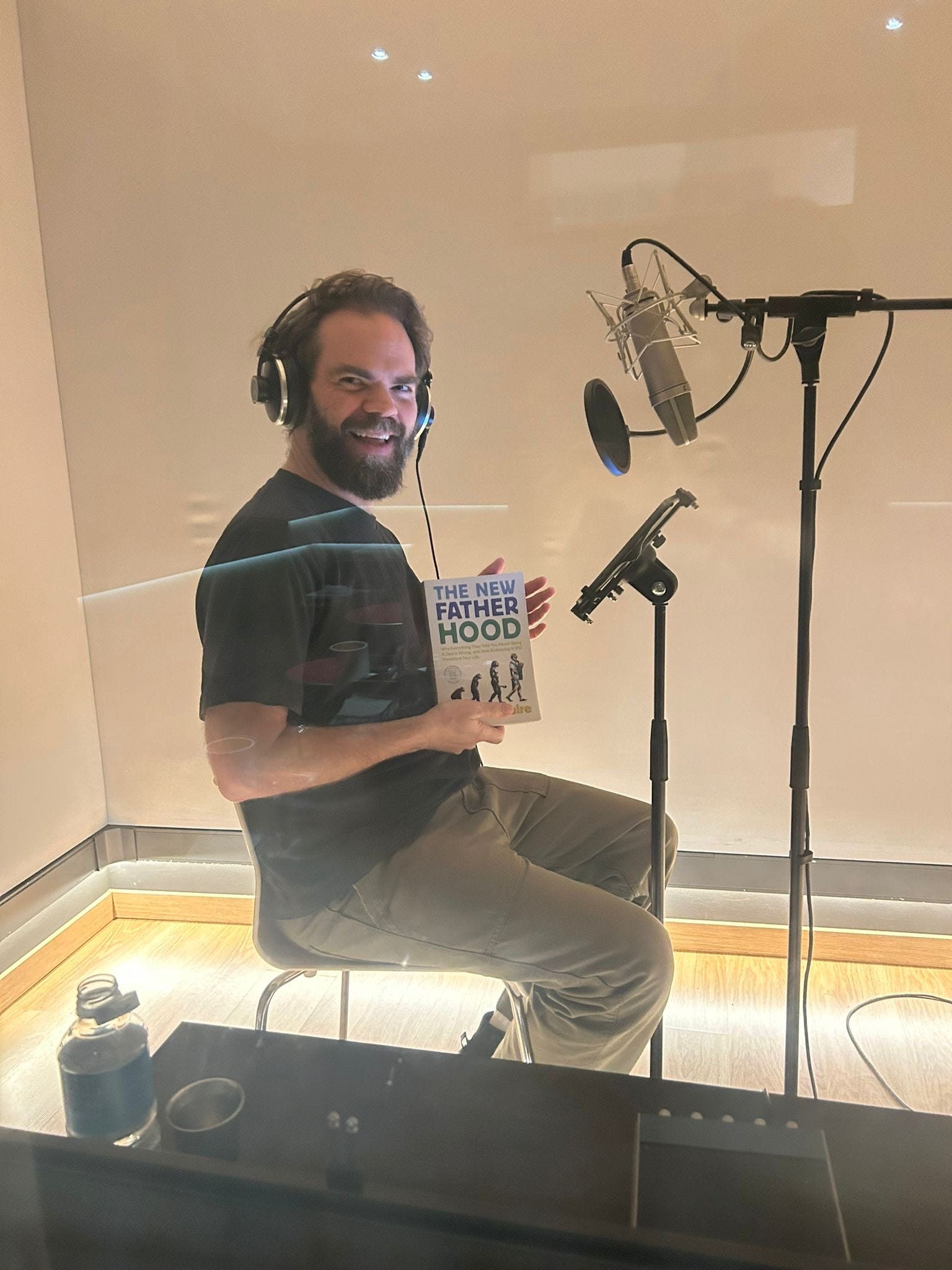
This week I’ve been in the studio laying down bars recording the audiobook. I wasn’t sure what to expect, but it’s been a surprisingly delightful (and emotionally overwhelming) experience. I got choked up, repeatedly: it was the first time I’d read huge chunks of the book out loud, vocalising my battle with paternal postnatal depression, the process of learning to love my son, and getting to a place where I can give myself grace. Fun fact you might like to know—the audiobook comes out the same day worldwide, May 12th. Fun fact I’d quite like to know: do I actually get paid royalties if people listen to it for free on Audible or Spotify? Answers on a postcard, or maybe I should send an email to my editor …
Say Hello
How did you like this week’s issue? Your feedback helps me make this great.
Loved | Great | OK | Meh | Bad
This is the last newsletter of March, so your final call to sign up for a paid subscription and ensure 100% of your cash goes directly to a TNF dad who needs therapy and can’t get it. Here’s what one dad said about the experience:
As a dad who found himself struggling with a horrendous situation, the therapy I received through Kevin’s work enabled me to take a step back from problems and give some time to myself. To be able to talk openly to a professional about my feelings, issues, and current difficulties helped relieve some of the pressure I am under and allowed me to understand why I’m feeling how I am, and what steps I can take to help myself. It’s a massive weight off my shoulders sharing my experiences, which ultimately helps me be the best dad I can be.
If you’re a dad who already supports the newsletter with a paid subscription, I sincerely hope you feel a warm glow as you read that, and a sense of satisfaction that you helped make it happen. And if you’re a dad that could do with a little help, you can get details on how to access the therapy fund here.
Loved!
The train derailing and watching it happen - that’s the line that got me. The gap between the father you intended to be and the one who shows up at 6pm depleted is something I think about a lot. What struck me about your piece is that finding the explanation changed everything for you. Most of us are still searching for ours. Thank you for writing this honestly