


T minus 5 days until the book goes on sale. If you’re based in New York, please come join me at Lofty Pigeon Books on Tuesday, 12 May, as I’ll be celebrating the launch in conversation with Sam Graham-Felsen, former podcast guest and author of the excellent “Where Have All My Deep Male Friendships Gone” essay in the New York Times last year. We’ll be talking fatherhood, friends, and figuring it all out.
30 years ago, DJ Shadow changed the game when he dropped the revolutionary future classic Entroducing…, which was (as verified by Guinness World Records) the first album made entirely from samples. Crafting sonic landscapes by wielding the Akai MPC60 like a paintbrush, twice he asked listeners, “What Does Your Soul Look Like?” Fast-forward three decades, I find myself asking a very similar question of myself, the REBOOT dads, and the coaching clients I work with:
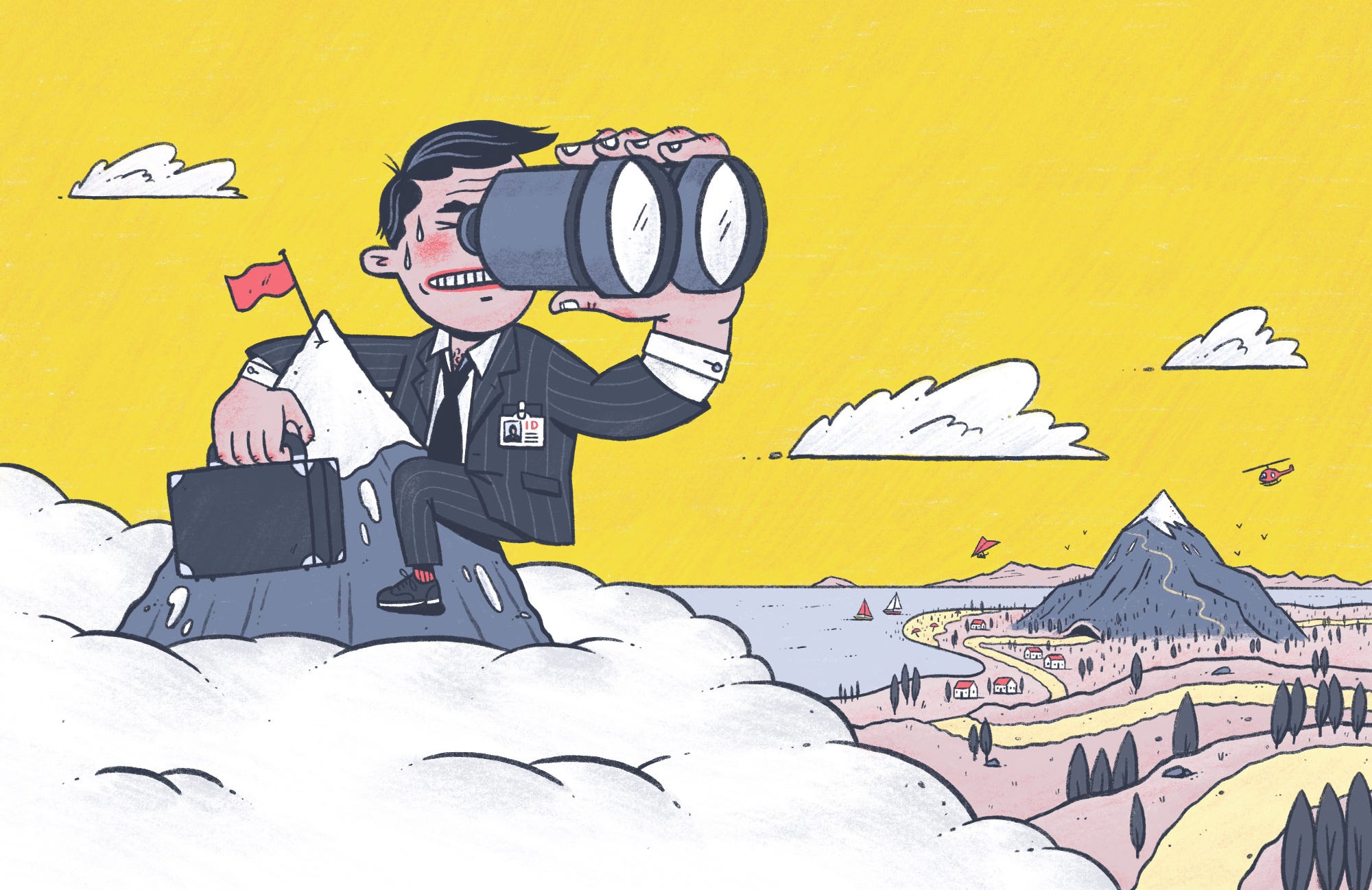
What does success look like?
Lynn Goldsmith had an idea. She worked what modern business columnists would term a “portfolio career.” Born in Detroit in 1948, Wikipedia notes she is (note present tense) “an American recording artist, a film director, a celebrity portrait photographer, and one of the first female rock and roll photographers.” Her work has been featured on over 100 album covers for the likes of Paul Simon, Miles Davis, Dr Dre and INXS, and her photographs can be found in collections at the Smithsonian and the MOMA. She was, for a short while, the co-manager of Grand Funk Railroad and became the youngest woman ever accepted into the Directors Guild of America. She spent decades capturing the life and times of musical icons: Bruce Springsteen’s canonisation in the hearts of blue-collar America; the infamous stadium tours of The Rolling Stones; the ascent of Michael Jackson from boy band singer to global icon.
Goldsmith has had, by any definition, a successful career. And not just in one area. Island Records—the Jamaican-born label home to artists such as Grace Jones, Nick Drake, U2, Pulp and Amy Winehouse—released an album from Goldsmith under her pseudonym Will Powers: “Dancing for Mental Health.” She referred to it as a “comedy self-help dance record,” and enlisted the help of musicians including Sting, Niles Davis and Carly Simon to collaborate on the project.
The album’s opening—and, honestly, only decent—track is “Adventures in Success,” a wonky 95 BPM number that has since become a staple record in leftfield disco scenes. Atop a groove that would coax even the staunchest wallflower to the dancefloor, Goldsmith’s vocoder-lowered voice offers “three laws of success” in a blueprint Baz Luhrmann would eventually copy and paste for his 1999 hit “Everybody’s Free (To Wear Sunscreen)”.
“You are an important person, a rare individual
A unique creature
There has never been anyone just like you
And never will be
You have talents and abilities no one else has
In some ways, you’re superior to any other living person |
The power to do anything you can imagine is within you
When you discover your real self
By practising a few simple laws of success.”
Goldsmith released this album as a parody of the self-help scene she was surrounded by in entertainment circles at the time. She pitched her voice lower in an attempt to present herself as genderless, reminding us that success resides from within, repeating ad infinitum: “It’s you, only you.”
Comparison is the thief of joy. I spent at least a decade measuring my success against that of others, comparing my career trajectory to those more successful than me. I’d work backwards via their LinkedIn experience, creating their career timeline, and measuring it against my own; a professional cover version of that unique flavour of sadness that comes from judging your own life against the carefully curated photos of others on Instagram.
For the longest time, my definition of success was clear: get a job at Google. Sometime around the turn of the Millennium—when Google started to clearly become a better way to find things on the internet than Ask Jeeves or AltaVista, and stories started to surface about the type of work and the kind of environment their employees were enjoying—I knew I wanted to work there. I spent time at various jobs, never intentionally heading towards the Googleplex, but always having it as a north star, a dream scenario, should things go my way. I came tantalisingly close in 2010 when I started working for a digital agency that had them as a client. Then, towards the end of 2011—after 6 months of interviews and being asked as many “how many windows in New York” questions as I’d been led to believe—I got an offer. Contract signed. Box ticked.
I was Heath Ledger’s Joker, the dog that finally caught the car. Now what? With that long-held goal achieved, there was a void where drive had once been, a fuel tank marked “ambition” running empty just as it was pulling into the driveway. Something had to take its place. It became filled with a definition of success that wasn’t my own. I got sucked up into caring about things I once hadn’t: internal visibility, promotions, performance scores, industry awards; corporate junk food, filling my sense of success but ultimately unnourishing, eternally unfulfilling. I internalised what a large company had decreed as success and made it my own. It took a while, but I was cured of this ailment after working with a fantastic coach in 2017. He helped me redefine what success could look like for me, putting me on the path I still find myself walking.
I have friends and peers who have achieved incredible success in their lives. Some became “the youngest ever person to [x],” others launched successful businesses of all kinds and colours, experiencing that meteoric career rise that comes from the perfect combination of determination, inherent talent, privilege, likability, and a sprinkle of good luck. In years gone by, I’d look at their careers and wonder why mine hadn’t quite hit those heights—a career-based remake of Sliding Doors playing in my mind, yours truly starring in the role of future snake oil saleswoman, pusher of ineffective pills and vagina-scented candle manufacturer Gwyneth Paltrow.
Last month marked the eight-year anniversary of leaving Google. I’d like to say “the day I handed in my badge,” but I’d be lying: I kept the badge, told them I lost it. During those years working for myself, I’ve had highs and lows—during the pandemic, I’d have bitten someone’s arm off for a monthly paycheck—but I’ve become increasingly at ease with the idea of life as a “slashie.” This term, originally derogatory, once referred to folks in the creative industries who hadn’t found the success required to work only in their chosen field: busboy/actor; waitress/actress; cleaner/scriptwriter; singer/secretary. In recent years, it’s become a collective term for those who find themselves spread across concurrent multiple careers; multi-hyphenates of the type trailblazed by Lynn Goldsmith decades ago.
Success isn’t a dirty word. Its definition is in the eye of the beholder. As much as I turned my back on one interpretation of success—keeping the dream job, striving for another promotion, working towards a performance-related bonus—I haven’t given it up completely. My criterion is no longer tied to a salary bracket or a job title that might make others seethe with envy. Your level of ambition is irrevocably connected to your definition of success. And no one rationale is more right, or more noble, than any other. You might be driven by the need to provide for your family and your future. You might seek to drive a positive impact in the world through what you do. Yours might be anything. But the question is simple: Is your metric of success your own? Or have you inherited it from someone, or somewhere, else?
January marked five years of writing this newsletter. On the verge of publishing my first book, I’m reminded that all those years ago, after recovering from my episode of paternal post-natal depression, I thought writing a book might be the answer. But who the fuck was I to write a book? All I’d written were PowerPoint presentations for distracted execs, attempting to wrestle their attention away from the small screen in front of them toward the big screen I was pointing at.
Instead, I drifted towards the safer shores of the newsletter. My definition of success was simple and internal: write and publish once a week. If no one read it, it didn’t matter. I wanted to put something out into the world that could help another dad-in-need, who might find himself where I was during those dark months. But I’m feeling nervous for the first time in a long time. This project has already put me in orbit with some of the most incredible dads—people I’ve respected from afar my entire life, kindred spirits who embody the idea of “abundant fatherhood” that underpins the book’s central thesis. This week, I sat down with a hero of mine, whose work truly influenced the gestation of TNF: the writer Austin Kleon, to talk about his new book for a future podcast episode. He told me about what Jonathan Lethem calls “The Gulp,” the time between completing a creative endeavour and awaiting its release into the world.
Are you tired of reading about the book? I’m getting tired of writing about it. I’m so tired of thinking about it, tired of waking up in the middle of the night and wondering just what will happen when it goes out into the world. Honestly, I’m just plain tired. Welcome to the world of fatherhood, I guess? This corner of the internet has always been a place to share where my head is at on kids, life, and where I’m at in this grand journey of figuring it out as I go, assembling the parachute as I hurtle towards the ground. But I’m almost there. This Sunday, I’ll jump on a plane to New York and take a leap into the unknown. I’ll spend time with some of the people who’ve made The New Fatherhood happen: the guys at Selman who brought it to life, early subscribers of the newsletter who have been solid supporters from the start. I know what my publishers see as success: a big number, books sold, bums on seats. For me, the book’s success will reflect what’s driven me in the five years of writing this newsletter—how many dads will this help? And how might they take what they learn from the book, and use it to show up better for the other dads in their lives?
What will happen next? Who knows.
But it won’t be long until we find out.
“Describe the inner person you’d like to be
Let your mind run wild
Assume you can be anything that you desire
The fact is, you will become the person you honestly describe
You can’t avoid it”
— ” Adventures in Success”, Will Powers
3 things to read this week
“What Will It Take to Get A.I. Out of Schools?” by Jessica Winter in the New Yorker. Winter poses the perennial question facing modern parents: What good is it controlling access to technology at home, if it’s given away for free at school? Her two kids get new laptops at school, which come with an AI assistant as standard, who “reads her poems and knows her passwords” and “is always watching through the screen.”
“In Defense of Husbands” by Darby Saxbe in Natal Gazing. Gazing forward to June, and there’s another great fatherhood book on the horizon: Saxbe’s Dad Brain, which details the surprising changes in our brains after we have kids. In the meantime, her latest newsletter covers the shift in the share of household work over the last twenty years, in which the “core” chore gap (cooking, cleaning, laundry) has narrowed by 40%, as we head into an era of cautious hetero-optimism.
“Passed Out on Gummies” by Juno DeMelo in The Cut. Melatonin, the hormone produced naturally by the body to regulate our sleep cycles, is available as an over-the-counter supplement in the US, and is increasingly given to kids to help them sleep. When we lived in the US and flew back to the UK to visit family every year, these gummies were a lifesaver: a way to short-circuit the circadian system and help our kids get back onto a regular sleep cycle and minimise the dreaded jet lag. This piece serves as a snapshot of the current lay of the land, with multiple class-action lawsuits filed in the US, and actions being taken by parents and manufacturers to prevent kids from tucking into them like they’re Skittles.
Good Dadvice


Say Hello
How did you like this week’s issue? Your feedback helps me make this great.
Loved | Great | OK | Meh | Bad
Branding by Selman Design. Illustration by Tony Johnson. Survey by Sprig.
When I saw the worlds 'Fatherhood' and 'Grappling' in the first three lines and instantly thought that I wrote this article. But than I started to read it and realized I did not:)
Looking forward to reading your book! It seems natural to first take other’s definition of success and start on that path. We see this first from parents, then teachers and others. They want a *safe* path for us and those external markers of success feel safe, at first. But for those that listen and can hear something deeper, they recognize they want something a bit different. Veering off the typical success pathway can be terrifying, and many days are daunting. But ultimately, looking inward, defining success for yourself and finding your own way, is gratifying in the best of ways.