


A quick thanks to the 81 guys (and 17 gals!) who filled in this year’s reader survey. I’ll send out the $25 Bookshop.org vouchers next week, so if you’d like one, you still have a week to tell me a little about yourself.
This week, I’m handing over the reins to Sam Hendrix. Sam is one of the most outdoorsy dads I know, and so many of us dream of spending more time outside with the family. But, as you’ll see, it’s another of life’s pleasures that shift dramatically when your children are involved.
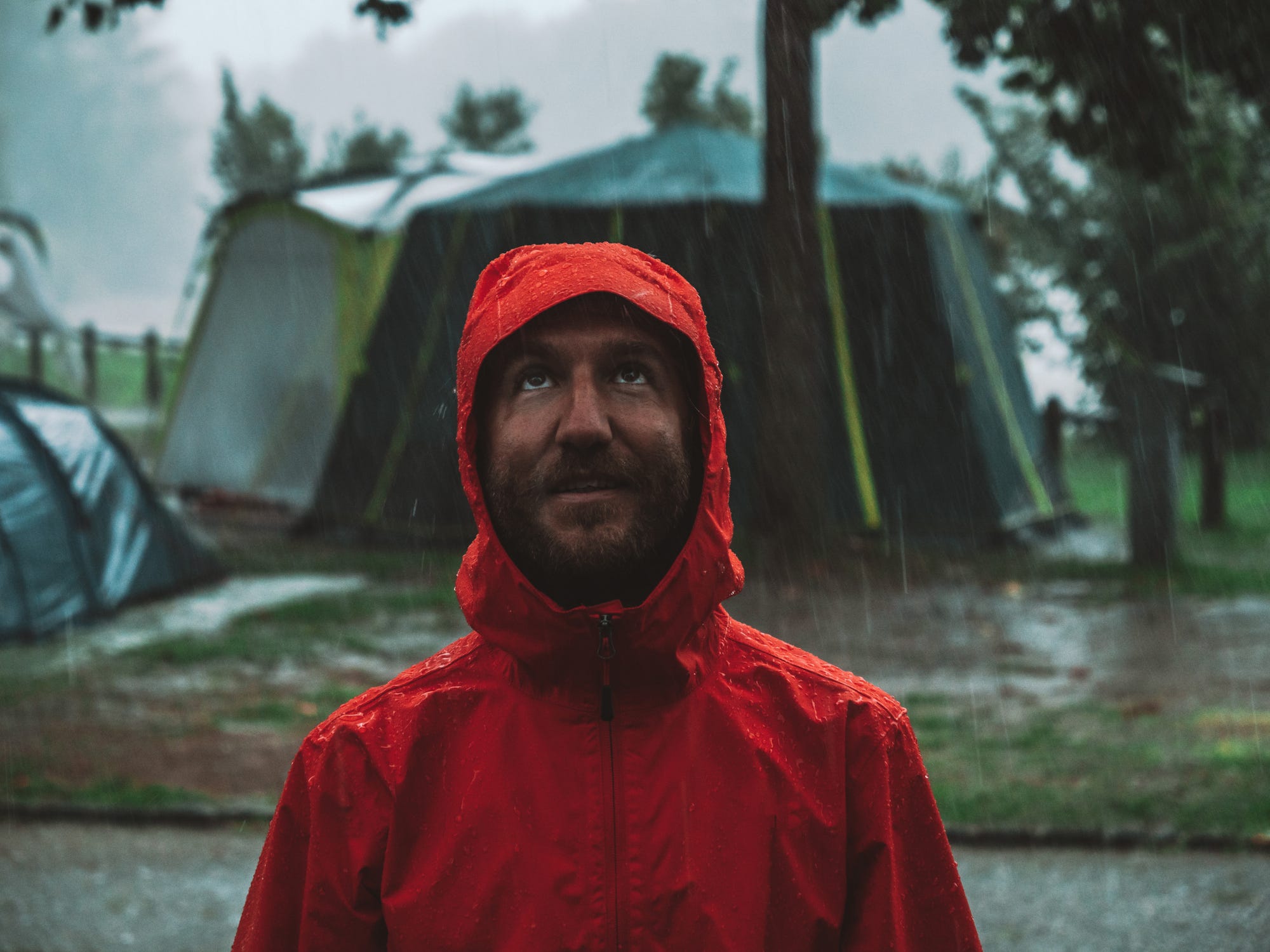
“Is this fun?”
This question had been rattling around in my brain the last few days of our week-long road trip across Vancouver Island with two kids, one and three years old.
In some of my social circles, the idea of The Fun Scale is frequently discussed. Type 1 fun is fun while it’s happening, and fun to reflect on after—think a day at the park or seeing your favorite movie on the big screen for the fifth time. Type 2 fun is miserable while it is happening, but once the pain and suffering is over, you look back on it fondly. For Type 2 fun, the parts that you hated in the moment become the most indelible memories; this is what keeps runners coming back, marathon after marathon, even when they’ve sworn this would be their last. Type 3 you wish didn’t happen: not fun at the time and not fun in retrospect; a broken bone, food poisoning from that new Thai spot, let it never be discussed again.
I had been quietly pondering (or perhaps silently seething) “Is this fun?” for a while before verbalizing it to my wife, sitting in the dark around a locked, unlit fire pit, wildfires and climate change stealing one of the seemingly few joys of a family camping trip.
I honestly don’t remember her response. It was rhetorical, anyway—indicative of my own self-loathing state, more concerned with venting my frustrations than hearing hers. She tends to be the positive one. I didn’t need her ruining my downward spiral.
Over the course of four days, we had made our way west across Vancouver Island. By my recollection, the current count stood at:
1 public meltdown at a brewery
2 bike wipeouts at the first campground
2 sleepless nights in an unbearably hot tent
1 potential case of the measles (false alarm)
1265 Spotify replays of “How Far I’ll Go” from Moana
1 impending storm that would force us inside a hostel for the next 2 days
This wasn’t our first family vacation—or even our first camping trip—as a quartet. We thought we were prepared. Between campsites, we strategically planned a couple of motel stays so everyone could shower, sleep comfortably, and recharge before the next stop. But the constant change in scenery every day or two threw off any sense of regulation for the kids. Naps became irregular, often skipped or cut short. Meals were traded for an endless stream of snacks during car rides so we didn’t have to stop. We thought we could cram in more and more to keep them engaged. Unfortunately, all sense of normalcy and stability went right out the window, as did my generally well-behaved children.
Now, sitting in the dark campground outside Tofino, I questioned why we were doing any of this. Whether I still enjoyed the same things I used to. Before kids, this was the best of Type 1 fun: summers in the Pacific Northwest spent sleeping under the stars, ferry-hopping island to island on our bikes, afternoons at a sunny brewery. But with kids, these now feel like monumental feats. Fitzcarraldo never tried getting a toddler to sleep in a tent when the sun wouldn’t set for another four hours.
As a new father, I was so worried about whether or not my kids would like what I like that I never stopped to consider how my relationship to those activities might change. If you’re really looking to kickstart an identity crisis, ask yourself what happens when you no longer enjoy the things that have come to define you. Will I still want to go camping when I know it’ll take a week to emotionally recover? How much fun is a bike ride with an extra 40 pounds in the trailer behind you? Is skiing still fun when you spend more time passing out snacks than skiing? Each time the planning cycle for a new trip starts, these calculations begin spinning in my head and I assess whether the effort is worth the outcome. Is the time spent planning, packing, traveling, crying, fighting, seething, worth it in the end?
Given everything I’ve just said (and this may come as a surprise), I have found the answer is almost always yes. As time passes after these trips, the tantrums fade, and I remember my three-year-old singing Moana on an old-growth stump in a national park. Classic Type 2 fun.
I didn’t arrive at this answer until months after Kevin asked me to write something for the newsletter. When I first put these thoughts down, it was a therapeutic rant, fresh off our return home. This essay would have looked very different had I left it there: harsh and untrue. I began questioning the source of my guilt. What’s wrong with me? Is it just me? Are the other dads actually having as much fun as they seem? We’ve all met the dads whose identity is complaining about their kids. I didn’t want to be one of those, and I’m NOT one of those. I know how fortunate we are to have this short time with them at this age, but still struggle to adjust to a new pace so different than before. I spent decades optimizing my world to minimize friction as much as possible. But nothing creates more friction than adding a couple of kids into the mix.
When planning these trips, I dwell, I seethe, and I dig in my heels because I know the effort and the outcome are different than what they used to be. Expectations are tricky: my expectations for time off still lag behind the reality of vacations with two small children. Inside of me, there is still a battle of “doing this for me” vs “doing this for them,” and I sometimes feel I am losing at both, but the truth is, I am slowly learning that I win either way.
As we’ve gotten further from this trip (and taken several more to greater success), we continue to learn what works and what doesn’t. There’s a common saying that “tragedy plus time equals comedy.” I’m not considering my family vacation anything close to a tragedy—but distance has allowed me to view the trip in a gentler light and even laugh a little bit about the experience.
So, I ask myself again, “Is this fun?”
Sometimes, it just depends on which type you mean.
3 things to read this week
“Have We Destroyed Childhood?” by Joshua Rothman in The New Yorker. Imagine your other half constantly tracking your location, having regular meetings with your boss and demanding a full debrief of your day over the dinner table. That’s the thought experiment psychologist Peter Gray opens his new book, Restoring Childhood, with—and it sets him on a collision course with Jonathan Haidt. The Anxious Generation blamed the phone; Gray blames the decades of shrinking freedom that came before it: in one example, 86% of English primary schoolchildren walked home alone in 1971; by 2010, it was 25%.
“America’s Biggest Dating Company Is Betting on Trad Values” by Faith Hill in The Atlantic. In 2013, 34% of singles surveyed said women should be their children’s primary caregiver. This year, more than half did, and among Gen Z men it was 70%. Match Group (the company behind Tinder, Hinge and OkCupid) is betting on that shift with Upward, a relaunched dating app—formerly targeted at Christian users—that includes a “chivalry mode” and a “marriage timeline” setting. I’m regularly reporting on the men who are pushing fatherhood forward, but it seems that some folks are yearning for a return to what Upward’s marketing calls “chivalrymaxxing.”
“The unsettling rise of grandmAIslop” by Amanda Hoover in Business Insider. Boomers may be slower to adopt AI than younger generations, but they’ve finally found one use for it: turning photos of their grandkids into AI caricatures, ’80s photo parodies and personalised children’s books. Hoover talks to the parents quietly panicking about where their children’s faces end up. One media professor argues the generational split isn’t about tech skills—it’s about how different generations grew up thinking about privacy. “We’re losing the tenuous grasp over our own images. And for some, their families are the first ones to give that control away.”
Good Dadvice
Say Hello
Another week, another newsletter. How was it for you?